

Appliances have become a part of our everyday lives. We couldn't live without them but most of the time they go unnoticed and are taken for granted. They have just become a part of the daily fabric of our lives as they help us go about our daily tasks. They are the things that keep our food chilled, wash and dry our clothes or cook our food. They are the things that make daily chores more bearable and simpler.
The Complete Guide to Buying Used Appliances
Of course, as technology continues to advance at an amazing rate new technologies and even more ingenious and innovative features are packed into our appliances. The core functions remain largely the same, but the overall experience we get from appliances just makes our life even more bearable and even simpler than we could have ever imagined. Who would've ever thought when the first refrigerators became a staple of our homes that decades later these machines could be providing us with ice cold water and crushed ice on tap?
In modern times, as the pace gets quicker and our lives get busier, we have to multi-task more and more - and we have come to expect the same from our technology. Smartphones are now essentially mini-computers that we carry around in the palm of our hand, for example. And so, we have almost come to expect the same from our appliances - Okay, there's a limit to the number of features that can be packed into the humble kettle or toaster, but we generally have come to expect a lot from appliances in general.

As a result, with appliances there's now much more choice than ever before and that can make the search for used appliances a bit bewildering at first. Essentially though, looking for any used appliance is a very simple process. First you need to establish what functions and features in an appliance that you consider to be absolutely essential. The things you have to have. Next, you need to assess the various options and then assess which appliance will be the 'best fit' - and meets your particular needs, preferences, style and lifestyle.
This Buyer's Guide takes you through all the major points you need to bear in mind about appliances and the key differences between the various types and styles, so that your search and final choice can be as informed as possible.
We'll start with those all-important cooling appliances.
Refrigerators and Freezers
The fridge is often the centrepiece of our kitchens. It's certainly an appliance that gets a lot of use as we open and close it during the day. A fridge is just there but we rely on it so much. When buying used fridges you need to consider the design and layout of your kitchen. This will, for a start, dictate the sort of size that you can go for. This decision needs to be combined with thought about your needs: number of people in the household, shopping habits and what your storage needs are.
- Fridge and Freezer Configurations
For fridge freezers, the most common configurations are those that have the fridge on top and the freezer below and vice versa. The former is the most popular because most people use the fridge more frequently than the freezer, and it wouldn't make a lot of sense to have to bend down continually to open the fridge. Some models offer a 50/50 split, although a 60/40 split (the fridge being the larger space) or even 70/30 are the most common combinations.
- Features of fridge freezers
Having established an appropriate size of fridge freezer, you then need to consider the organisation of the unit.
Adjustable shelves and compartments are useful to organise the contents of a fridge. Check that the layout is suitable for your needs, and that it offers enough flexibility for you.
- In-door dispensers
Some models will offer features such as ice and water dispensers. This means that filtered water and either ice cubes or crushed ice can easily be gathered, without even opening the door of the fridge.
- Display and digital
High-end models will offer touch and display controls that provide alarms about temperatures or open doors. Some even contain television screens in the front panel.

- Freestanding and compact
Both fridges and freezers are available in standalone versions and compact models that might be suitable if space is at a premium. Large chest freezers, more likely utility rooms and garages provide an excellent amount of space if you store a lot of frozen food.
- Colour and Finish
Although traditionally considered to be 'white goods', these days fridges and freezers aren't necessarily always in white. Stainless steel or brushed steel and black are some of the other popular colours that are available.
Cookers and Ovens
Next, we’ll look at another vital home appliance, cookers and ovens. Again, there's a great variety of ovens and cookers on the market. You are sure to find one that is suited to your particular needs and requirements. Of course, the space you have available in the kitchen might mean that one of the larger types of cooker might not be a practical choice.
- Range cookers
Range cookers are seen by many as the ultimate in cooking appliances. Wide models that can contain 2 ovens and warming compartments and up to 8 hobs on the top of the cooker provide extra versatility. Although, the classic traditional appliance, you can buy range cookers these days that come in ultra-modern styles too - and designs that would complement even the most contemporary of kitchen designs. Also, many manufacturers now produce smaller sized range cookers and some are even in the size of a conventional oven. These will give a taste of the range cooking experience for those who are limited with space.
- Oven size and features
Range cookers usually offer 2 cookers and spaces designed for warming food all within the unit. Conventional gas and electric ovens tend me to be either single or double ovens. Some contain grills to the top of the oven. Fan ovens reduce cooking times as heat is circulated throughout the oven by means of the fanning process. Electric ovens tend to have more programmable features and timer features than gas. Many ovens now include self-cleansing systems. Catalytic liners (often the sides of these ovens have a slightly speckled appearance) help to collect grease and fat residue making cleaning much easier. Pyrolitic ovens literally burn all grease and fat away and into a crisp. The oven locks and heats up to extreme temperatures to do this so that once the process has completed, ash can simply be wiped away.

- Cooker Hobs & Hoods
Essentially a cooker is a unit that provides a hob and an oven in one single unit. An oven does not include the hob. This means that built-in ovens and built-under ovens can be easily integrated into kitchen cabinets and really complement the overall look of the space. Hobs can be purchased separately and are particularly popular used as a cooking space in larger kitchens with island counter-tops.
Ventilation hoods are often included with cooking units and are a great way to absorb the heat that is created when cooking as well as cooking smells. Cooker hoods aid circulation and dissipate steam, heat and odours and divert it from the kitchen. There are also stylish pieces that can complement the overall design of a kitchen. They are widely available as separates as well as integrated appliances.
- Gas or electric?
The type of fuel supply that you choose for a cooker or oven. Both have advantages and disadvantages. Most people prefer gas hobs because an even distribution of heat which is easy to control. Electric ovens are better in terms of heat distribution and reliability and accuracy of heat temperature. It is for these reasons that dual fuel cookers are so popular. You will see many appliances that offer gas hobs to the top of the unit and an electric oven below. Let's look at gas and electric in more detail.
- Gas cookers
In general, gas cookers provide more precise heat control than their electric counterparts. Gas hobs provide instant heat and the heat can be cut instantaneously too. Although slightly more difficult and fiddly to clean than electric hobs, many appliances now come with sealed ceramic burners and removable pieces that make cleaning a less arduous task.
- Electric cookersElectric hobs are often considered to be inferior to gas but modern electric burners have seen great advancements in technology with various electric and digital controls making use simpler and easier to control. Ovens provide the most reliable and constant temperature throughout the oven.
Dishwashers
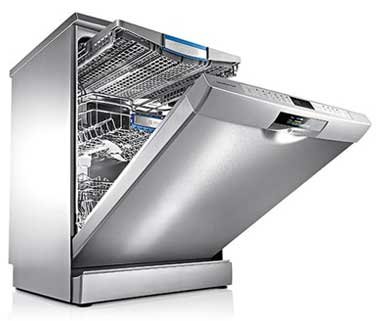
Most people that have the space for a dishwasher will now have one in their kitchen. The benefits of having an appliance that can take the chore of washing-up out of our hands has to be a good thing! Dishwashers can rinse, clean and dry and the most energy-efficient models will use less water in the process than conventional washing-up. When choosing second hand dishwashers it's important to check that a model has settings that will appropriate for the kind of dishes you intend to put in it.
Another important feature is the size of the holes that are present on the dishwasher's wash arms. The smaller the holes, the more powerful the clean will be. Most dishwashers now have plenty of settings to meet most needs and even sensors that detect the needs for a particular load.
Laundry appliances
Laundry appliances come in three main types: washing machines, tumble dryers and washer dryers.
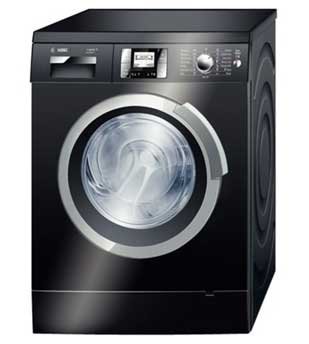
Washing Machines
Washing machines have one function - washing laundry. They have become highly technologically advanced with a wide range of programmes and pre-set wash cycles according to the type of garments that are being washed. For example, cottons, delicates and even sports clothing. Most used washing machines offer programmes such as Quick Wash or Economy Wash to be used if you have a light load of washing to do or laundry that isn't heavily soiled. These programmes save time, money and can be more eco-friendly.
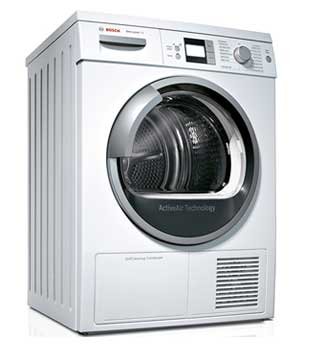
Tumble Dryers
Tumble dryers also have one single function - drying laundry. Just like washing machines though, they come with varying degrees of programmes and functions to cater for the needs of different loads and garment types. Sensor dryers in tumble dryers are a common technology feature that will automatically stop a drying cycle once the contents of the load of reached the appropriate level of dryness. This is much better for caring for clothes.
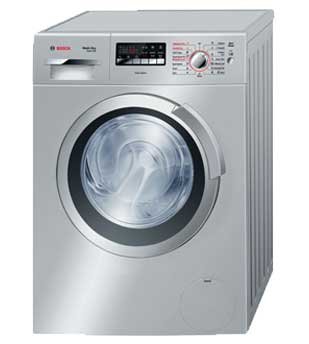
Washer/Dryers
As separate appliances, washing machines and tumble dryers provide the best possible washing and drying performance that can be found. However, for households where there isn't space for two separate appliances, a combined washer dryer is the perfect solution. It is true that the quality of the washing and drying functions is not as good as you would find on a separate washing machine and tumble dryer. However, washer dryers still offer the best of both worlds because they still produce high quality performance in both processes. The convenience of having one single appliance to perform both tasks is a massive advantage and buying one instead of two appliances is cost-effective too.
As with cooking and cooling appliances, the space you have available in the home will often dictate the choice of laundry appliance that you decide to buy. The other key consideration are the functions and features that you believe are most important to your individual circumstances. A person who lives alone in a flat will have quite different laundry needs to a large family.
Consider how often you will need washing and drying of laundry and what types of garments you have the most of and choose appliances that best serve these needs. Most washing machines, tumble dryers and washer dryers all contain programmes and features that offer flexibility to suit most needs, but many offer a greater range of extras - you need to decide whether you really need all these features.
Energy Efficiency
Look for the energy ratings on all appliances. Those with high energy ratings are much better for the environment. Energy efficient appliances will also save you money on bills in the long run as they will use less gas, electricity or water. Although the savings on each are not massive on individual appliances, if you consider all the appliances you need to run in the home, having energy efficient models, or using energy efficient programmes (such as Economy Wash on a washing cycle) when you can will make pretty good savings for you over time.

Conclusion: Buying Second Hand Appliances
As with all used goods, the obvious benefit of buying second hand goods is the reduced cost. Sometimes the savings that can be made are significant. The reasons why sellers list used appliances are vast. The vast majority of possible reasons though suggest that goods are likely to be in excellent working condition. For example, although people tend not to update their white goods as frequently as entertainment appliances, such as televisions or technology devices, such as laptops, many will want to offload cooking, cooling and laundry appliances for several genuine reasons.
If people decide to have a new kitchen fitted, existing appliances might become redundant and no longer needed. Similarly, people moving to smaller or larger properties may choose to switch appliances at such a time.
Household appliances such as cooking, cooling and laundry appliances are built to last and have long typical life-spans and this should be taken into account when looking at purchasing second hand appliances. Of course, frequency of use is also a factor that needs to be considered. For example, a washer dryer that is only a year or two old will have plenty of life in it yet, but if the machine has been servicing a large family's laundry needs in that short space of time with frequent washing and drying, the wear and tear on the appliance will obviously be greater.
Frequency of use and cosmetic appearance are both worth considering but the best advice is to know the product you are considering purchasing. Do your research about particular products and their performance and what the RRP (Recommended Retail Price) new would be for the product. This information when combined with the information contained in the seller's listing will be invaluable in helping you decide if a particular item might be a worthwhile purchase.
In the vast majority of cases, second hand appliances will give you years of good service. The expected lifespan of appliances (with normal use) is impressive. Dishwashers and microwave ovens can be expected to last for at least 10 years. Cooling appliances, including fridges, freezers and fridge freezers can have a life span of up to 20 years. Similarly, all types of cooking appliances of all fuel types should last for at least 20 years. Indeed, laundry appliances can last for as long as 20 years. Again, remember that this is with the expected level of typical use. Any appliance that has been heavily used over time will have a reduced overall life span.
It's worth considering though, as a final point, about how our personal circumstances can change in 10-20 years. This explains why so many used appliances are available on the market - and also why people want to buy second hand appliances.
Good luck in your search for used appliances. Follow the advice given in this Buyer's Guide and use the further guidance on our brand and appliance type pages to help you further still in your search.